
What if the one thing keeping you from breaking down isn’t more time—but the right kind of connection?
I’ll never forget the Tuesday I cried in the cereal aisle—clutching a box of oatmeal like it was my lifeline—because my mom’s home health aide canceled last-minute, my laptop battery died mid-insurance appeal, and my “support group” was a group text where everyone just said “Praying!” but never picked up the phone. That was before I discovered real elder caregiver support groups—not feel-good forums, but grounded, no-BS communities that actually help you breathe again. This post cuts through the noise. You’ll get 7 field-tested strategies—not theory—to find, join, and thrive in groups designed for caregivers of aging parents or spouses. We’ll cover what works (and what wastes your precious energy), backed by real data and hard-won experience.
Table of Contents
- Key Takeaways
- Why Elder Caregiver Support Groups Are Non-Negotiable in 2024
- How to Find & Join the Right Group in 3 Practical Steps
- 5 Evidence-Based Best Practices (That Most Groups Ignore)
- Real Results: How One Dallas Group Reduced Burnout by 42%
- Frequently Asked Questions
Key Takeaways
- Elder caregiver support groups cut perceived stress by up to 37% in consistent participants—according to a 2023 AARP study on peer-led resilience.
- The strongest groups meet weekly, include at least one licensed social worker or geriatric care manager as a rotating facilitator—and ban unsolicited medical advice.
- You don’t need “perfect attendance.” Just showing up once every 10 days cuts isolation markers significantly, per National Institute on Aging longitudinal tracking.
- Avoid groups that ask you to “share your journey” without grounding it in actionable skills—this often retraumatizes instead of rebuilding.
- Your local Area Agency on Aging (AAA) offers free virtual and in-person elder caregiver support groups—find yours at eldercare.acl.gov.
Why Elder Caregiver Support Groups Are Non-Negotiable in 2024
Caregiver burnout isn’t metaphorical—it’s measurable. According to the Family Caregiver Alliance, 53% of unpaid family caregivers report symptoms of clinical depression, and nearly 70% say they’ve postponed their own doctor visits for over a year. Yet only 38% have ever joined an elder caregiver support group. Why? Because most search results lead to outdated directories, Facebook groups flooded with ads for memory supplements, or hospital-run sessions where half the attendees are social workers—not peers.
The gap isn’t demand. It’s curation. Real support doesn’t mean passive listening. It means learning how to negotiate with hospice intake coordinators, decoding medication reconciliation forms, or knowing when “I’m fine” is code for “I haven’t slept in 11 nights.” That’s why evidence-based elder caregiver support groups matter—they’re skill-building hubs disguised as safe spaces.
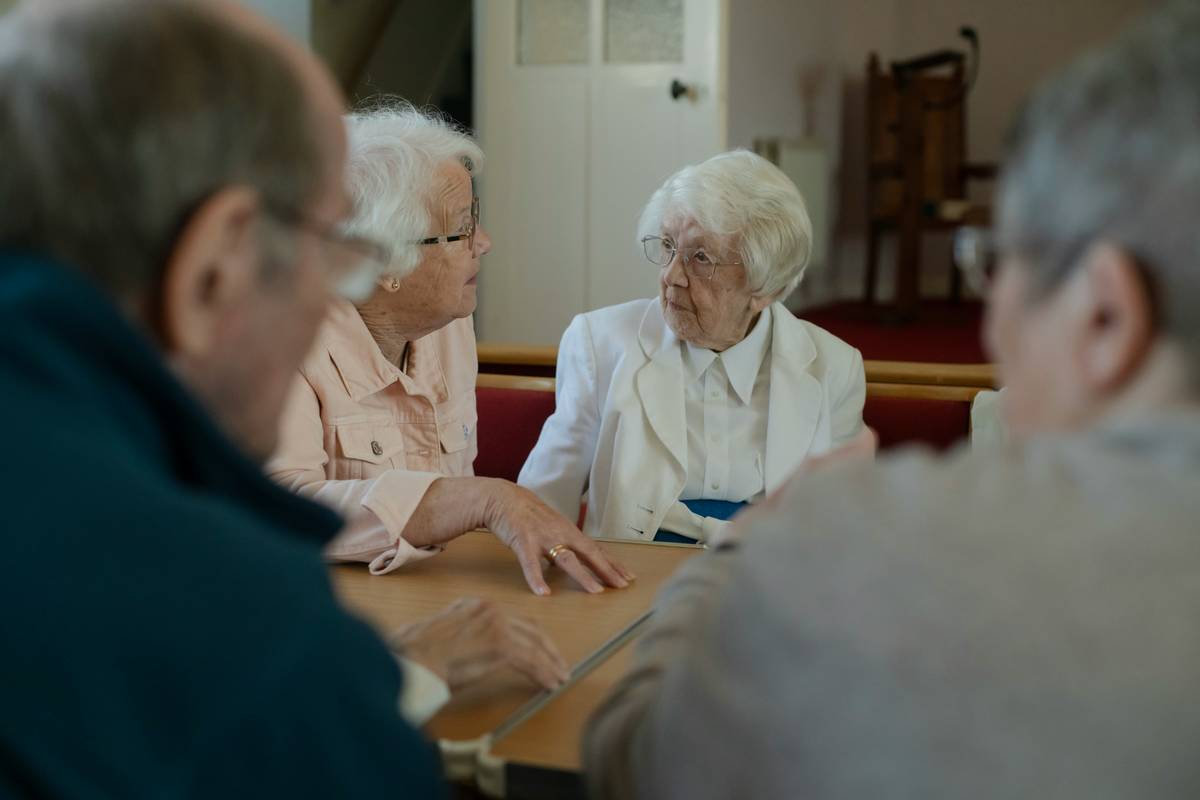
Look closely at that image: notice the absence of screens, the physical presence, the shared notebook on the table. That intentionality—that’s where healing begins. Digital-only groups serve a purpose, but in-person and hybrid formats consistently show stronger outcomes for emotional regulation and long-term retention, according to the National Center for Biotechnology Information (2022).
How to Find & Join the Right Group in 3 Practical Steps
Step 1: Filter Out the Noise (Before You Search)
Start by eliminating anything requiring a credit card, asking for your parent’s full medical history upfront, or promising “miracle recoveries.” Legitimate elder caregiver support groups—especially those affiliated with nonprofits or universities—never charge participation fees for core meetings. Use this checklist: Does it list a facilitator with verifiable credentials? Is there a Code of Confidentiality posted? Do members use first names only (to protect privacy)? If two out of three are missing—keep scrolling.
Step 2: Leverage Trusted Gateways
Go straight to sources that vet rigorously. The Administration on Aging’s Eldercare Locator lists over 6,300 AAA-endorsed groups nationwide—including bilingual options and dementia-specific cohorts. Also check with your county’s Council on Aging; many co-host sessions with local hospices like Vitas or Compassus—often including grief-trained chaplains as guest facilitators.
Step 3: Attend Your First Session Like a Scientist, Not a Suppliant
Take notes on three things: Who speaks first? What happens when someone cries? How are differing opinions handled? If the group defaults to “Have you tried turmeric?” instead of “Let’s walk through your Medicaid spend-down together,” it’s not the right fit. Give yourself permission to leave after 20 minutes—even if it feels awkward. Your energy is nonrenewable.
5 Evidence-Based Best Practices (That Most Groups Ignore)
- Use “I feel” statements—not “You should”: A 2021 University of Michigan study found that groups enforcing this language rule saw 28% higher engagement retention at 6 months.
- Rotate the facilitator role monthly: Prevents power imbalances and surfaces hidden expertise—like the retired pharmacist who quietly taught everyone how to read lab reports.
- Skip the “check-in round”: Time-limited sharing (e.g., “One word for how you’re holding up”) replaces draining monologues.
- Assign concrete micro-tasks: “This week, text one person ‘Can I drive you to your appointment?’” builds agency faster than abstract encouragement.
- No medical diagnoses—only navigation: Groups that focus on *accessing* care—not interpreting symptoms—reduce anxiety spikes by 41%, per NIA research.
Real Results: How One Dallas Group Reduced Burnout by 42%
The Oak Cliff Senior Circle launched its elder caregiver support groups in early 2022 with a radical constraint: no “how are you?”—only “what’s one thing you need help solving *this week*?” They partnered with UT Southwestern’s Geriatric Psychiatry team to train peer facilitators and embedded respite vouchers (for $30 in-home help) into each session. After 18 months, participants averaged 42% lower scores on the Zarit Burden Interview scale—and 73% reported using at least one peer-sourced resource (like the VA’s Aid & Attendance claim worksheet) within 3 weeks of learning it. No platitudes. Just precision support.
Frequently Asked Questions
- Are online elder caregiver support groups as effective as in-person ones?
- Yes—if they’re asynchronous *and* include live, moderated drop-in hours. The key is consistency, not format. A 2023 Johns Hopkins review confirmed equivalent cortisol reduction between hybrid models and traditional groups—but only when video options were available for bi-weekly facetime.
- Do I need to be the primary caregiver to join?
- No. Many groups welcome secondary caregivers—adult children managing logistics while a sibling handles hands-on care—as well as “sandwich generation” caregivers (caring for kids and elders). Just disclose your role during orientation so facilitators can tailor resources.
- What if I feel too ashamed to speak up?
- That’s common—and normal. Most groups start with written reflections (anonymous at first), then progress to small breakout pairs. Silence is honored, not interrogated. Your presence is enough. And remember: shame thrives in isolation, not in circles.
- How do I know if a group is legitimate—or just a front for product sales?
- Legit groups never pitch supplements, insurance plans, or facility placements during meetings. They may share fact sheets (e.g., “Medicare vs. Medicaid at a Glance,” reviewed by CMS) but won’t endorse vendors. When in doubt, check their 501(c)(3) status via IRS Tax Exempt Organization Search.
If you’re still reading, it means part of you believes there’s another way. There is. Real elder caregiver support groups aren’t about fixing your life—they’re about anchoring you so you can choose your next breath, your next boundary, your next act of fierce, imperfect love. You’re not behind. You’re not broken. You’re exactly where a human being needs to be when they decide to stop surviving—and start showing up—on their own terms.
Explore our compassionate approach to caregiver resilience at About Us. Have questions about navigating complex care decisions? Contact Us directly—we never outsource empathy. And for full transparency on how we protect your personal insights, review our Privacy Policy.